
Level 169
HARDHow to solve Sand Loop level 169? Get instant solution for Sand Loop 169 with our step by step solution & video walkthrough. Sand Loop 169 tips and guide.
Play Sand Loop Now
Experience the puzzle challenge firsthand
Game Screenshots
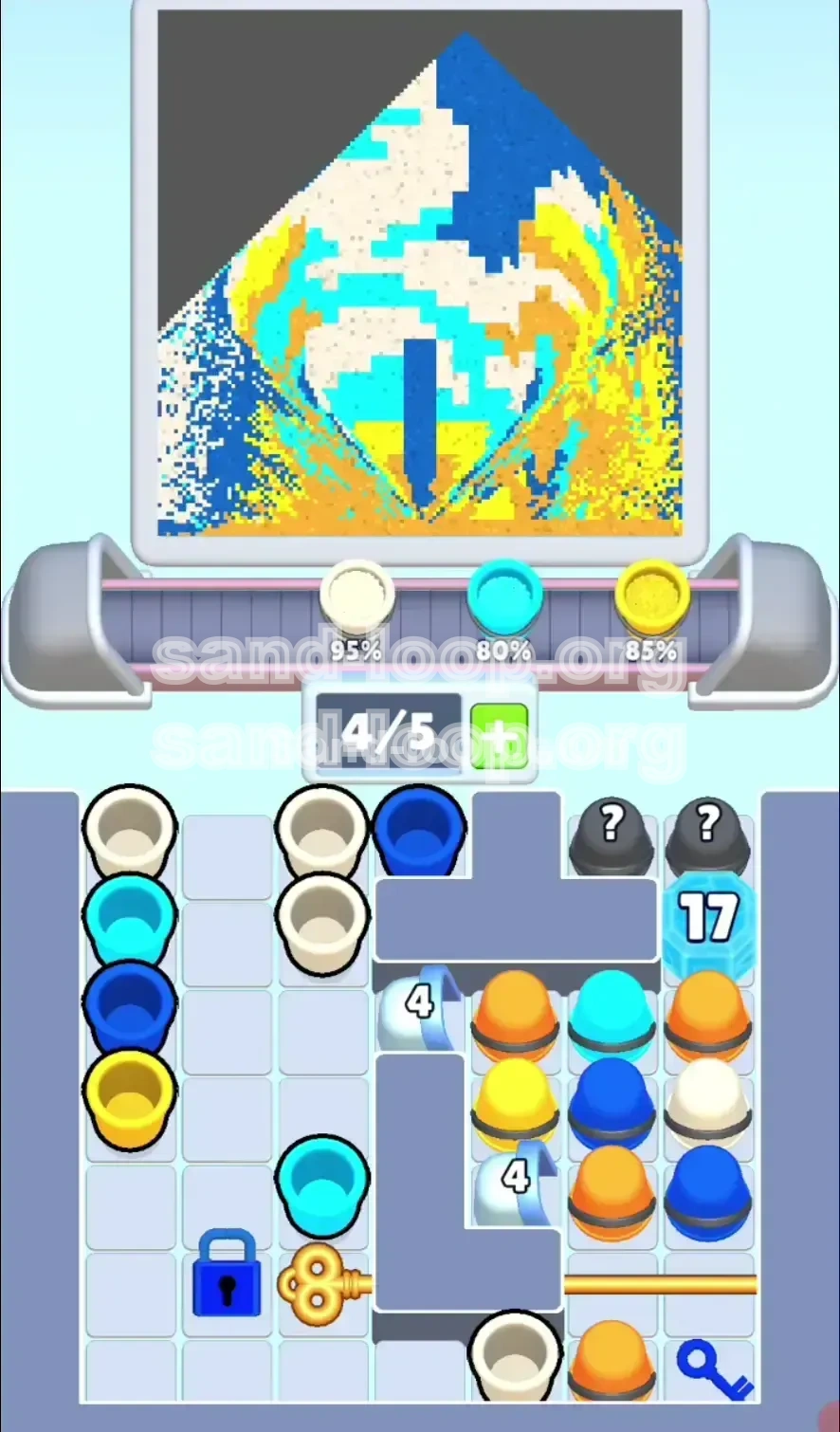
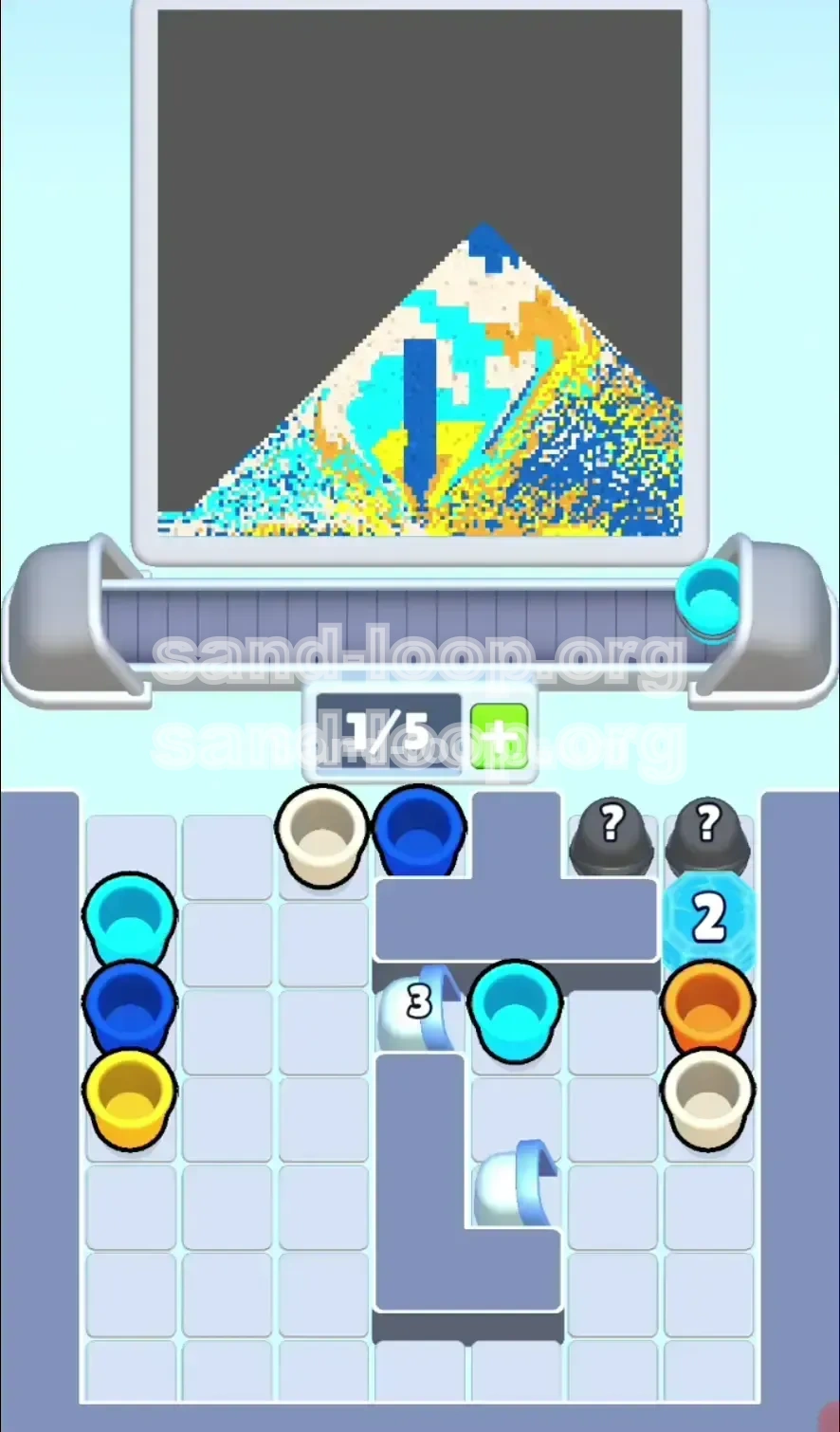
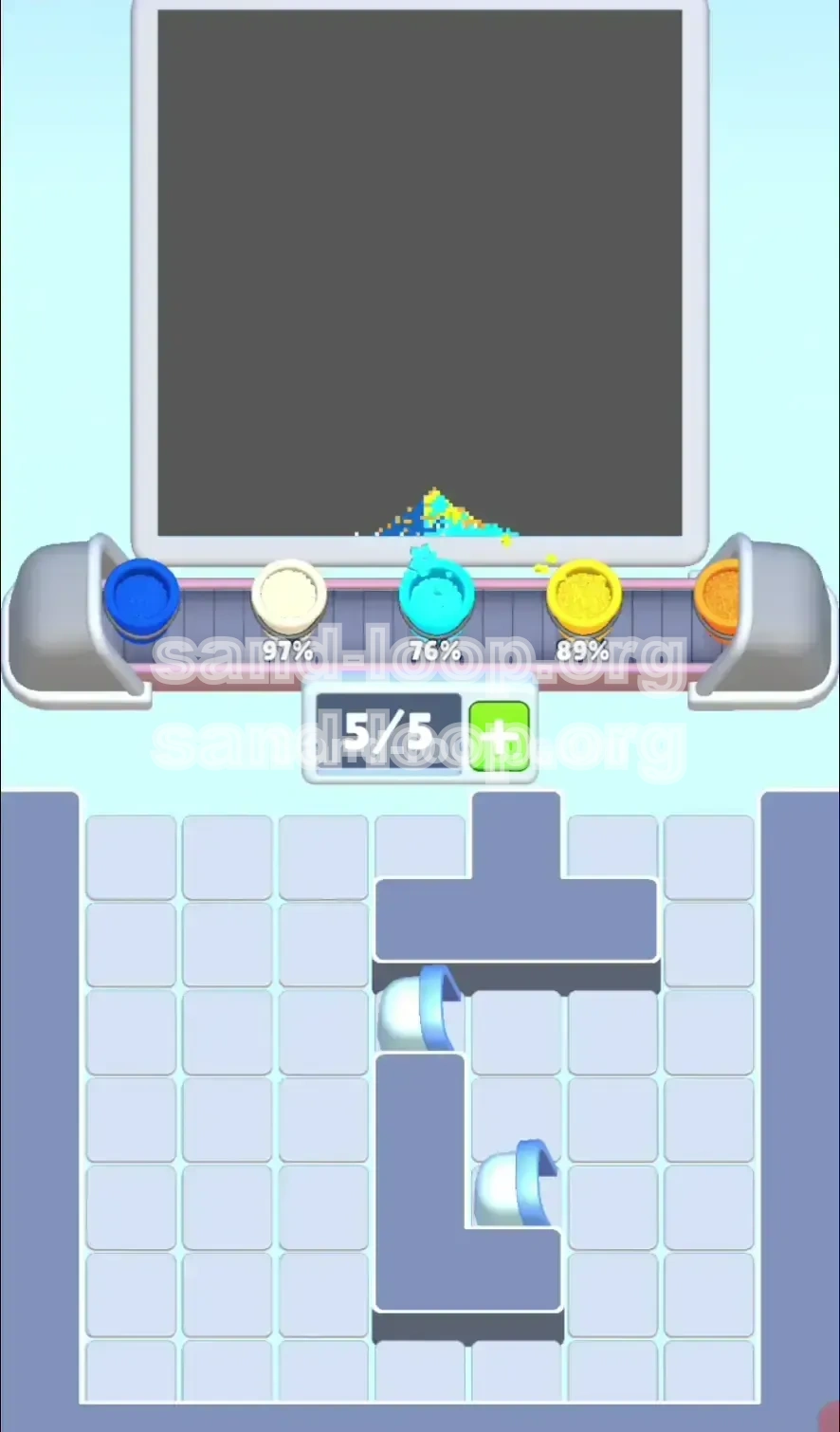
Sand Loop Level Guides
Level Overview: The White Cat Challenge
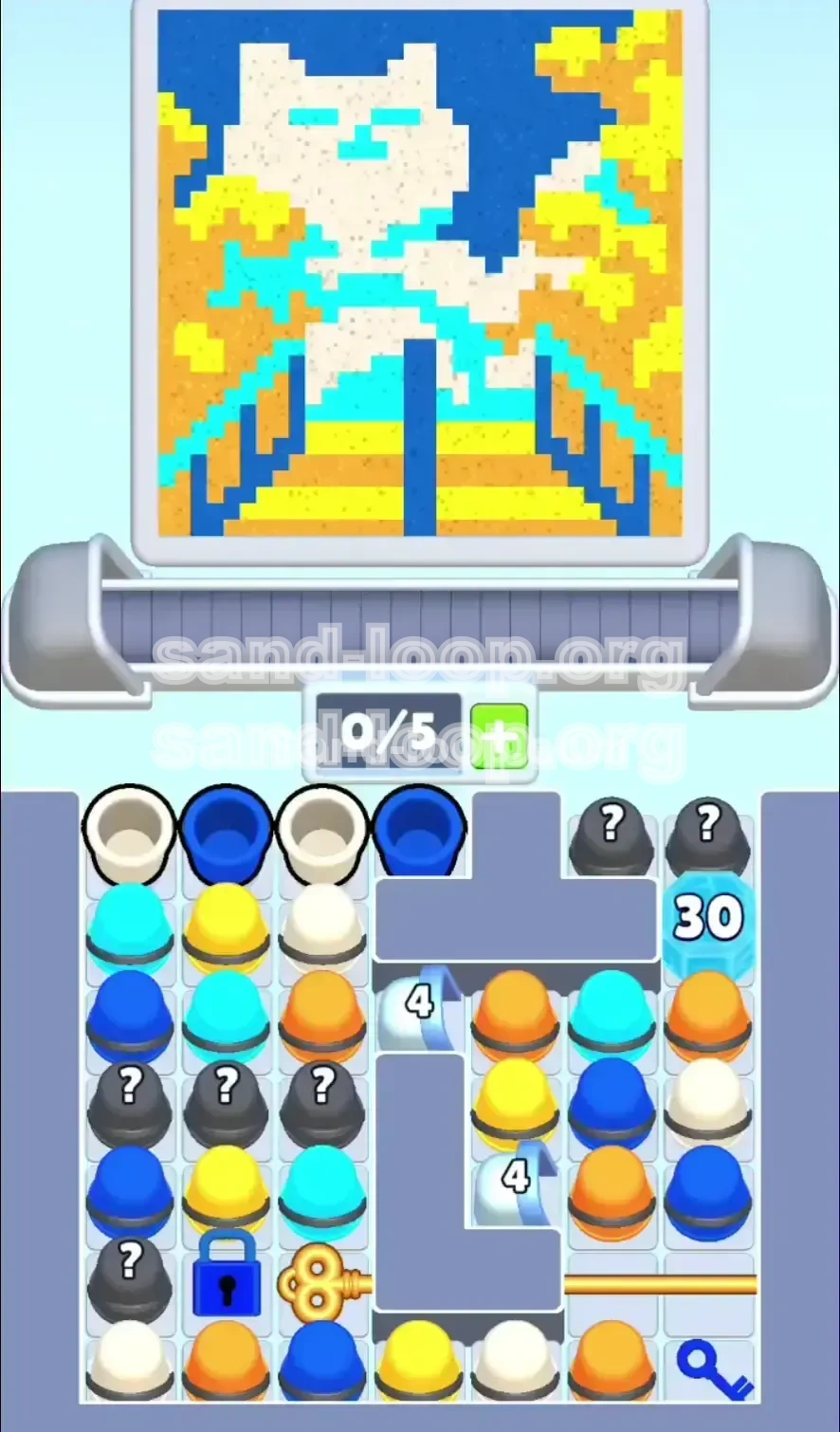
Welcome to Level 169, commonly known as "The White Cat." This stage is a significant shift in pace from previous levels, prioritizing logic, resource management, and precision over raw speed. The visual objective is to paint a pixel-art white cat (or fox-like creature) sitting against a contrasting background. However, the real challenge lies in the layout of the tray. You are immediately confronted with a "30-count" Ice Block, two distinct locking mechanisms, and a variety of Mystery Cups that add an element of RNG (random number generation) to your strategy. Unlike standard levels, you cannot simply spam colors; you must unlock the tray in a specific sequence to access the necessary pigments.
The Logic-Over-Speed Design
Level 169 is classified as a logic stage. The physical layout of the tray actively works against you, splitting your available resources into isolated zones. If you attempt to treat this as a speed run and cycle cups as fast as possible, you will likely find yourself with a full conveyor belt of useless colors while the specific cups you need remain locked behind obstacles. Patience and tactical selection are your best tools here.
The Ice Block Obstacle
The most immediate threat is the massive Ice Block labeled "30" located on the right side of the tray. This is a "hit counter" lock. It does not require a key; instead, it requires 30 actions to shatter. An "action" is defined as dispatching a cup from the conveyor or successfully clearing a cup from the tray. This block sits atop critical Orange and White cups, meaning your mid-game progression is gated solely by your ability to cycle cups rapidly in the early game.
The Mystery Cup Variable
Scattered throughout the initial layers are "Mystery" cups, easily identified by their gray appearance. These cups conceal their true color until they are processed or unlocked. In this level, Mystery cups often function as "wildcards" that can fill gaps in your color palette. However, relying on them is risky. A core part of the strategy involves identifying which gray cups are safe to use and which ones might disrupt your color order.
Key Lock Mechanisms
Beyond the Ice Block, there are two physical locks: a Blue Lock and a Gold Lock. The Blue Lock prevents access to a cluster of essential Yellow cups, while the Gold Lock seals the bottom-right corner. The keys for these are buried deep within the stack. The Blue Key is trapped in the lower right, and the Gold Key is wedged under a central T-shaped blocker. You cannot access these keys until you clear the overlying layers, creating a complex dependency chain.
Visual Analysis: The Cat Canvas
The target image is deceptively complex. It requires a crisp White body, Cyan accents for the eyes and scarf, Dark Blue for structural outlines, and a blend of Yellow and Orange for the background. The difficulty arises from the contrast requirements. The White sand must stay strictly within the cat's body lines; if it bleeds into the Cyan eyes or the Yellow background, the pixel art will look muddy. This demands high-precision pouring, particularly when switching between the dominant White and the detail colors.
Resource Management Constraints
Your conveyor belt holds 5 slots. In Level 169, managing these slots is harder than usual. Because the tray is split by a large T-shaped static blocker, you cannot always reach the cup you want immediately. You often have to load cups you don't strictly need just to move the conveyor belt forward to reach the cups behind them. Wasting slots on "filler" cups can lead to a deadlock where you have no space to pick up the actual key you just uncovered.
Clear Objectives: Your Path to Victory
To beat Level 169, you must move beyond random clicking and execute a calculated sequence of operations. Your primary goal is to shatter the Ice Block to free the mid-game resources, followed by securing the keys to unlock the Yellow and Orange reserves. The following objectives break down the macro-strategy into manageable goals.
Primary Goal: Shatter the Ice Block
Your Number 1 priority for the first 30 moves is the Ice Block. Do not worry about perfect painting accuracy in the first 30 seconds. Every cup you send to the nozzle reduces the counter. Even if you send a Yellow cup that hits a White area, consider it a necessary sacrifice to chip away at the block. You need that block gone to access the White and Orange cups trapped underneath it.
Secondary Goal: Unlock the Yellow Reserves
The background of the image is predominantly Yellow and Orange. You have a massive cache of Yellow cups locked behind the Blue Lock in the bottom left. You must locate the Blue Key (which is buried in the bottom right) to free these up. Until you unlock the Yellow zone, you will likely run out of background pigment before the image is 50% complete.
Tertiary Goal: Isolate the White Body
The White Cat is the focal point. You must establish a strong White base early on without overrunning the details. This means you need to reserve your White cups (found in the top left initially) for the main body mass and avoid using them for "filler" moves to break the Ice Block. Save your White cups for when you can actually target the body.
Quaternary Goal: Execute Precision Cyan Details
The Cyan eyes and scarf are the "soul" of the image. These are small areas. If you pour Cyan too early, it gets buried by White. If you pour it too late, you might overshoot the small target areas. Your objective is to clear the surrounding area first, then hit the Cyan spots with precision timing to ensure they sit on top of the White base without bleeding.
Final Goal: Background Blending
The last 20% of the level is blending the Orange and Yellow background. This is usually the easiest part, provided you haven't wasted all your Orange cups on the Ice Block counter. The objective here is to fill the top corners and the ground line without disturbing the cat's outline.
Step-by-Step Instructions: The Complete Walkthrough
This section provides the exact sequence of moves to navigate Level 169 from start to finish. Follow these steps to manage the tray effectively and complete the image without getting stuck.
Phase 1: The Top-Left Clearing & Ice Block Farming
Start by focusing entirely on the top-left quadrant. You have access to White, Dark Blue, Cyan, and Yellow cups.
- Load White and Dark Blue: Immediately grab the White and Dark Blue cups. These are safe bets. Dark Blue creates the outline, and White starts the body.
- Mystery Cup Management: As you clear the top row, you will expose Gray Mystery cups. Click these to see what they turn into. If they turn into Orange or Cyan, keep them. If they turn into colors you already have (like Yellow), use them immediately as "fodder" to reduce the Ice Block counter.
- Keep the Belt Moving: Do not let the conveyor belt stop. The timer for the Ice Block only ticks down when cups are processed. If you stand still thinking, you lose time. Keep loading cups, even if they aren't perfect matches for the canvas immediately.
- Watch the Counter: Monitor the "30" number. Once it hits 15, start looking toward the right side of the tray to prepare for the unlock.
Phase 2: The Right-Side Expansion
Once the Ice Block shatters (or gets close to shattering), shift your focus to the right side of the tray.
- Access the Blue Key: With the Ice Block gone, you can now clear the vertical column on the far right. Focus on removing cups above the Blue Key. This usually involves clearing a mix of Orange and White cups.
- Secure the Key: Once the Blue Key is exposed, prioritize picking it up. Do not leave it on the tray. Put it in your conveyor belt immediately to clear the space.
- Unlock the Bottom Left: Take the Blue Key to the Blue Lock in the bottom left. This is a critical moment. Unlocking this releases a flood of Yellow cups.
- Restock on Yellow: Once the lock opens, fill your conveyor belt slots with the newly unlocked Yellow cups. You will need a lot of Yellow for the background.
Phase 3: The Gold Key and the T-Blocker
Now that you have Yellow flowing, you need to tackle the center of the tray.
- Locate the Gold Key: Look for the Gold Key wedged under the T-shaped grey blocker in the middle. It is usually trapped beneath a stack of Cyan or White cups.
- Clear the Vertical Stack: You must clear the cups sitting on top of the Gold Key. Use your excess Yellow or White cups here. Don't worry about painting accuracy; just clear the physical obstruction.
- Retrieve and Use: Grab the Gold Key. Take it to the Gold Lock on the bottom right. This unlocks the final reserve of Orange cups and clears the path for any remaining stragglers.
Phase 4: Precision Painting - The Cat's Face
With all keys obtained and locks open, the tray is fully accessible. Now you must refine the image.
- Establish the White Base: Pour White sand to fill the cat's body. Leave the eyes and scarf area empty for now. It is better to under-fill the white than to over-fill into the background.
- The Cyan "Scarf": Locate the Cyan cups. Send a Cyan cup, but wait for a gap in the flow. You want the Cyan to land cleanly on top of the white or in the designated background areas without mixing.
- Fixing the Eyes: The eyes are small. If you missed them with the initial Cyan pours, load a single Cyan cup. Watch the nozzle. As soon as it passes over the eye area, click or drag to ensure it drops exactly where needed. Avoid sending multiple Cyan cups in a row here.
Phase 5: Final Polish and Background Fill
The home stretch. You are just filling in empty space.
- Top Corners: Use the Orange cups unlocked in Phase 3 to fill the upper background corners.
- Ground Line: Use Yellow to finish the ground. If you have excess Orange, mix it lightly at the edges of the Yellow to create a gradient effect, which looks better in the final scoring.
- Slot Management: Keep 2 slots open at the end. This allows you to quickly grab any specific color you notice is missing during the final "scan" of the image.
Color Order: The Processing Hierarchy
Understanding the correct order to process colors is vital for achieving a high score and completing the level efficiently. In Sand Loop, the order in which you pour determines which layers sit on top. Here is the recommended hierarchy for Level 169.
1. The Foundation: Dark Blue and White
Priority: Highest (Start)
Start with Dark Blue and White. Dark Blue serves as the structural outline (the "ink" of the drawing), while White is the base layer of the subject. If you pour Yellow or Orange first, the White sand will cover it up later, wasting your efforts. Establish the shape of the cat first before worrying about the background environment.
2. The Background Base: Yellow
Priority: Medium
Yellow is your primary background color. Because the cat is white, and the background is yellow, there is a risk of bleeding. Pour Yellow after the White body is roughly defined, but before the fine details. This ensures the background fills the space around the cat but doesn't obscure the outline. It is often safer to pour Yellow when the nozzle is on the opposite side of the cat to avoid accidental spills on the white body.
3. The Detail Layer: Cyan
Priority: High Precision
Cyan is your detail color (eyes, scarf). It must be processed after White and Yellow. If you process Cyan too early, the subsequent White sand will bury the eyes, making them disappear. Cyan is a "topping" color. It is the last thing you apply to the main subject to make it pop. Treat Cyan cups as high-value, fragile items.
4. The Accent Layer: Orange
Priority: Low (End Game)
Orange is used for the upper background details. It has the lowest priority because it occupies the least amount of real estate on the canvas and doesn't interact much with the White Cat's body. Save Orange for the end when you are just filling in the corners. It also sits nicely on top of Yellow if you need to blend.
Key Tips and Common Mistakes
Even with a strategy, things can go wrong. These tips and warnings will help you navigate the most common pitfalls of Level 169.
Key Tip: Conveyor Belt Slotting
Always keep 1 or 2 slots open on your conveyor belt. In Level 169, you often need to grab a key the moment it is revealed. If your 5 slots are full of sand cups, you cannot pick up the key, forcing you to waste a cup (and thus lose points) to make space. Keep a buffer for key retrieval.
Key Tip: The "Tick" Method
When switching between drastically different colors (like White to Cyan), use the "Tick" method. Watch the cups moving on the belt. There is a tiny gap (a "tick") between cups. Try to time your clicks so that a color switch happens during this gap. This gives the nozzle a split-second to reset, reducing the "smear" effect where a line of the wrong color connects two areas.
Common Mistake: Ignoring the Ice Block
Many players focus 100% on painting the cat's face perfectly in the first 10 seconds, ignoring the right side of the tray. This is a mistake. If the Ice Block doesn't break, you run out of White and Orange cups. You must multitask: paint a bit, then cycle a few cups from the right just to keep the counter moving.
Common Mistake: The Cyan Spill
The most frequent error is ruining the cat's face with Cyan. Because Cyan is rare and appears late, players often panic and spam it. Do not spam Cyan. One or two precise drops are all that is needed for the eyes. Pouring too much Cyan will turn the cat's white face blue, forcing you to cover it with White again, which wastes time and cups.
Common Mistake: Mystery Cup Roulette
Don't rely on Mystery Cups to save you. While they can be helpful, banking your strategy on a Mystery Cup turning into "Orange" is a recipe for disaster. Assume the worst-case scenario (that it turns into a color you don't need) and have a backup plan. Only use Mystery Cups when you have the inventory space to handle a "bad" roll.
Stuck Solutions and Speed Run Tips
If you are struggling to finish the level or are looking to optimize your time for a high score, these advanced tactics will help.
Stuck Solution: No Matches Available
The Problem: Your conveyor belt is full of Blue and Green, but the canvas only needs Yellow and White.
The Fix: Look at the top-left corner of the tray (the "free" zone). Are there cups there you can grab to trigger a refresh? If not, you must "dump" the bad cups. Pick a spot on the canvas that is already finished (e.g., a dark corner) and dump your bad colors there. This clears your slots so you can wait for the better colors spawning from the unlocked zones.
Stuck Solution: Trapped Key
The Problem: You can see the Blue Key, but you can't reach it because there are too many cups stacked on top, and your slots are full.
The Fix: You have to create a "hole." Stop painting the image. Focus entirely on the stack above the key. Use your current cups to clear the vertical column directly above the key. Once the key falls into an accessible spot (or the cup above it is gone), make room in your inventory and grab it.
Speed Run Tip: The "Pre-Load" Technique
While the Ice Block is still counting down (around 15-20 remaining), start loading your belt with White and Blue from the top left. Don't wait for the block to fully break before you start organizing your colors. If you have 3 White cups lined up the *second* the block breaks, you can unleash a torrent of sand on the cat's body instantly, saving precious seconds.
Speed Run Tip: Ignore the Small Details
For a speed run, perfection is the enemy of speed. Don't obsess over the Cyan eyes or the perfect Orange/Yellow gradient in the top corner. If the eyes are 80% filled, move on. Focus on clearing the tray and unlocking the keys. The background percentage completion contributes more to your score and speed than getting the eyes pixel-perfect.
Speed Run Tip: Bulk Processing
Instead of pouring one cup, waiting, pouring another, try to group colors. Load 3 Whites, then 3 Yellows. Process them in batches. This reduces the mental load of switching gears and allows you to focus on the macro-movements of the keys and locks rather than the micro-movements of the nozzle.