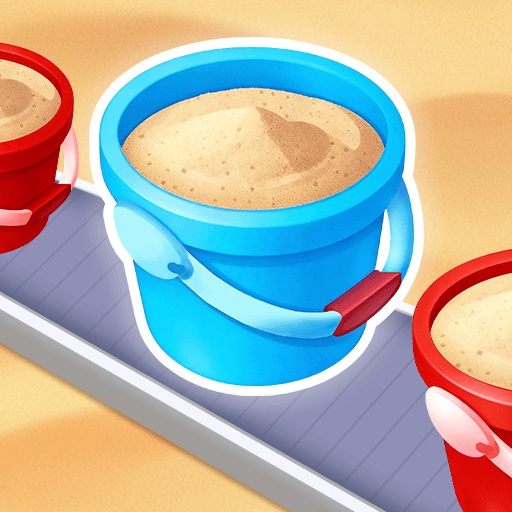
Sand Loop is not just about watching colorful grains fall; it is a test of logic, timing, and efficiency. As an advanced player, you know that simply getting the sand to the bottom is not enough. You want the perfect score, the cleanest split, and the fastest time. This guide dives deep into the mechanics of the game, moving beyond basic tutorials to provide actionable, high-level strategies.
We will break down the physics engine, control schemes, and logical planning required to dominate the leaderboards. Whether you are stuck on a complex puzzle or looking to optimize your sorting speed, these insights will help you view the game from a new perspective.
1. Understanding the Physics Engine
The core of Sand Loop lies in its simulation of granular material. Unlike water or simple blocks, sand behaves unpredictably. Mastering the game means predicting how these digital grains react to movement and gravity.
- Granular Collision: Sand particles stack up. If you pour too much into one funnel, the bottom layers compact while the top layers spill over.
- Flow Rate vs. Capacity: Every container and conveyor has a limit. Exceeding this limit causes a "spill," which usually mixes colors and ruins your run.
- Momentum and Inertia: When you move a conveyor belt, the sand on it doesn't stop instantly. It slides based on the speed of the belt.
- The "Avalanche" Effect: A small pile of sand can trigger a larger slide. It is like knocking over a domino chain; one grain moving can displace a hundred others.
- Settling Time: After moving a container, you must wait a fraction of a second for the sand to settle before making your next move. Rushing this leads to overflow.
Pro Tip: Think of sand like a thick syrup rather than a solid block. It flows, but it requires patience. If you try to force it too fast, it will resist and cause a mess.
2. Advanced Conveyor Control Strategies
Conveyor belts are your primary tool for directing the flow. Beginners use them to move sand from point A to point B. Experts use them to time the arrival of different colors.
- The Pulsing Technique: Instead of leaving a conveyor on constantly, tap it on and off. This creates "packets" of sand rather than a continuous stream.
- Timing the Switch: Use switches to change the path of the belt exactly when the color changes. It is like switching train tracks at the precise moment the locomotive arrives.
- Slope Management: Always try to keep conveyors tilted downwards. Flat conveyors cause sand to pile up, while steep inclines cause it to slide back down.
- Buffer Zones: Leave a section of the conveyor empty to act as a buffer. This space allows you to catch up if a previous sorting step takes longer than expected.
- Reverse Flow Logic: Sometimes, briefly reversing a belt can unjam a pile of sand. It shakes the pile loose, allowing it to flow forward again.
Pro Tip: Watch the leading edge of the sand flow. If the front of the line is clean, the rest will follow. Focus on guiding the first few grains perfectly, and the bulk will sort itself.
3. The Art of Splitting and Mixing
Many puzzles in Sand Loop require you to separate mixed colors or combine specific amounts. This requires a deep understanding of how particles interact when they collide.
- The "Funnel" Method: Use a funnel-shaped obstacle to slow down the flow. This gives heavier or larger particles more time to settle to the bottom.
- Layer Sorting: When two colors mix, they often layer based on density or size. Use this natural layering to direct the top layer into one bin and the bottom layer into another.
- Controlled Spills: If a container is full, let the excess spill over into a specific catchment area. It is like pouring too much tea into a saucer so you don't dirty the table.
- Avoiding Cross-Contamination: Once a bin is full, seal it immediately or move its output chute away. You do not want "Red" sand dripping into your "Blue" collection.
- Using Obstacles as Filters: Place small obstacles in the path of the flow. Small grains pass through, while larger grains are diverted to the side.
Pro Tip: Treat mixed sand like a deck of cards that needs shuffling. You are not just moving it; you are actively separating the "red cards" from the "blue cards" using gravity as your hands.
4. Logical Planning and Puzzle Solving
Success in Sand Loop is 50% reflexes and 50% mental preparation. Before you touch a switch, you should have a plan in place.
- The "Last Bin" Rule: Start your planning from the end. Look at the final containers and work backward to see exactly where that sand needs to come from.
- Identify Bottlenecks: Spot the narrowest point in your system. If that point gets clogged, the whole system fails. Prioritize keeping that area clear.
- Parallel Processing: Can you sort two colors at the same time? Setting up parallel conveyors saves massive amounts of time compared to doing them sequentially.
- Predictive Switching: Anticipate the color change before it happens. If you see a stream of yellow sand approaching a switch, flip it early so the transition is seamless.
- Error Recovery: Always have a "dump" plan. If a sort goes wrong, know exactly which switch to flip to divert the mess to a trash bin so you can restart the loop quickly.
Pro Tip: It is like cooking a complex meal. You chop everything, prepare the pans, and set the oven before you turn on the heat. In Sand Loop, set your routes before the sand starts flowing.
5. Optimization Techniques for High Scores
Once you can solve the puzzles, the next step is solving them efficiently. High scores depend on minimizing waste and maximizing speed.
- Minimize Switching Actions: Every time you flip a switch, you lose a fraction of a second. Design routes that require fewer changes.
- Maximize Gravity Usage: Let gravity do the work. A drop that takes 3 seconds is better than a conveyor that takes 5 seconds to move the same distance.
- Precision Over Speed: Moving too fast causes spills. It is better to be slow and accurate than fast and messy, as cleaning up messes takes the most time.
- Loop Recycling: In advanced levels, you can often loop unused sand back to the start of the mechanism to give it another pass through the sorter.
- Batch Processing: Group similar tasks. Do all the red sorting, then all the blue sorting. Switching contexts constantly slows down your brain and your machine.
Pro Tip: Imagine you are working on an assembly line. The most efficient worker is the one who moves the least and achieves the most. Eliminate unnecessary movements from your strategy.
Summary of Key Mechanics
To help you visualize these strategies, here is a quick reference guide to the core mechanics and how to use them effectively.
| Mechanic | Function | Strategic Use | Difficulty |
|---|---|---|---|
| Conveyor Belts | Moves sand from A to B | Use pulses to control flow density | Easy |
| Switches | Changes direction of flow | Time switches to separate color batches | Medium |
| Obstacles | Blocks or redirects flow | Use as filters to separate grain sizes | Hard |
| Gravity Wells | Pulls sand down rapidly | Use for fast transport over long drops | Medium |
| Mixers | Combines different sand colors | Use only when specific blends are required | Hard |
Frequently Asked Questions (FAQ)
Q: How do I handle levels where sand flows faster than my switches can react? A: You cannot outrun the sand; you must outsmart it. Instead of trying to catch the fast grains, slow them down first. Use a "brake" conveyor or an upward slope to reduce the flow speed before it hits your sorting switches. It is like putting a speed bump before a sharp corner.
Q: What is the best way to deal with "mixed" piles of sand at the start? A: Do not try to sort mixed sand immediately. First, spread the pile out into a thin layer on a wide conveyor belt. This gives you more time to see the individual colors and separate them before they enter the main sorting logic.
Q: Why does my sand overflow even when the container looks empty? A: This is usually due to "air pockets" or uneven settling. The sand piles up in a cone shape. Even if the edges of the container are empty, the center might be full. Tap the container or shake the conveyor to flatten the pile and maximize space usage.
Q: Are there shortcuts for completing levels faster? A: Yes, often you can bypass complex sorting mechanisms if a level allows for "imperfect" sorting. Check the win conditions; if you only need 80% purity, you can ignore the last 20% of difficult grains and dump them directly into the finish line.
Conclusion
Mastering Sand Loop requires a shift in mindset from a casual player to a logistical engineer. By understanding the physics of the sand, optimizing your conveyor routes, and planning your logic before you act, you can turn chaotic puzzles into streamlined systems. Remember, the sand always wants to go down; your job is simply to guide it there with the least amount of resistance. Apply these mechanics, stay patient, and watch your efficiency scores soar.